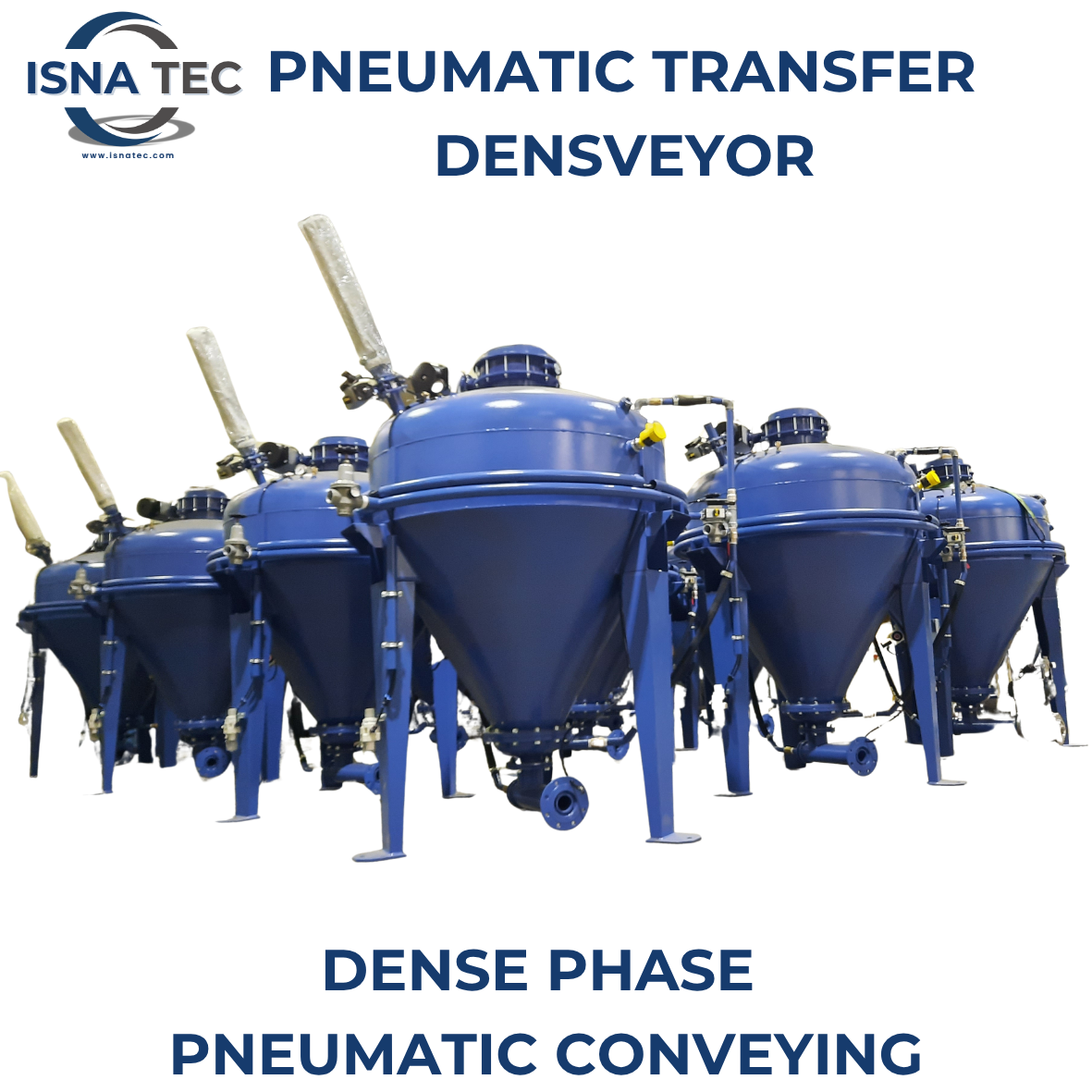
Dense Phase Conveying is a high-pressure, low-velocity system that moves bulk materials in "slugs" through pipelines. It is designed to protect fragile products from breaking and prevent abrasive materials from wearing out the equipment. This method ensures energy efficiency and maintains the consistency of your material from start to finish.
What is Dense Phase Conveying?
In simple terms, Dense Phase Conveying is a method of moving solids through a pipe using high pressure and low velocity. Unlike Lean Phase systems—can be compared to a "vacuum cleaner" that blows material at high speeds—Dense Phase moves material in "slugs" or batches.
Think of it like a piston moving through a cylinder; the material fills the entire diameter of the pipe and moves slowly and steadily.
Key Benefits
Product Integrity: Because the material moves slowly, there is very little impact or friction. This is perfect for fragile items (like coffee beans or cereals) that shouldn't break.
Low Wear and Tear: Moving abrasive materials (like sand or glass cullet) at high speeds ruins pipes quickly. The low velocity of Dense Phase significantly extends the life of your equipment.
Minimal Segregation: If you are moving a blend of different ingredients, Dense Phase keeps them together, ensuring the mixture remains consistent from start to finish.
Energy Efficiency: By using less air to move more product, these systems often reduce long-term operational costs.
How It Works
Loading: Material enters a pressure vessel (often called a sender or transporter).
Pressurization: The vessel is sealed, and compressed air is introduced.
Conveying: The air pushes the "slug" of material through the pipeline at a controlled, slow speed.
Discharge: The material reaches its destination (a silo or hopper) gently, with minimal dust or breakage